


轩辕剑之天之痕
German Media Fears Putin Preparing New ‘Raw Materials Trap’ for West_我的网站

一 |
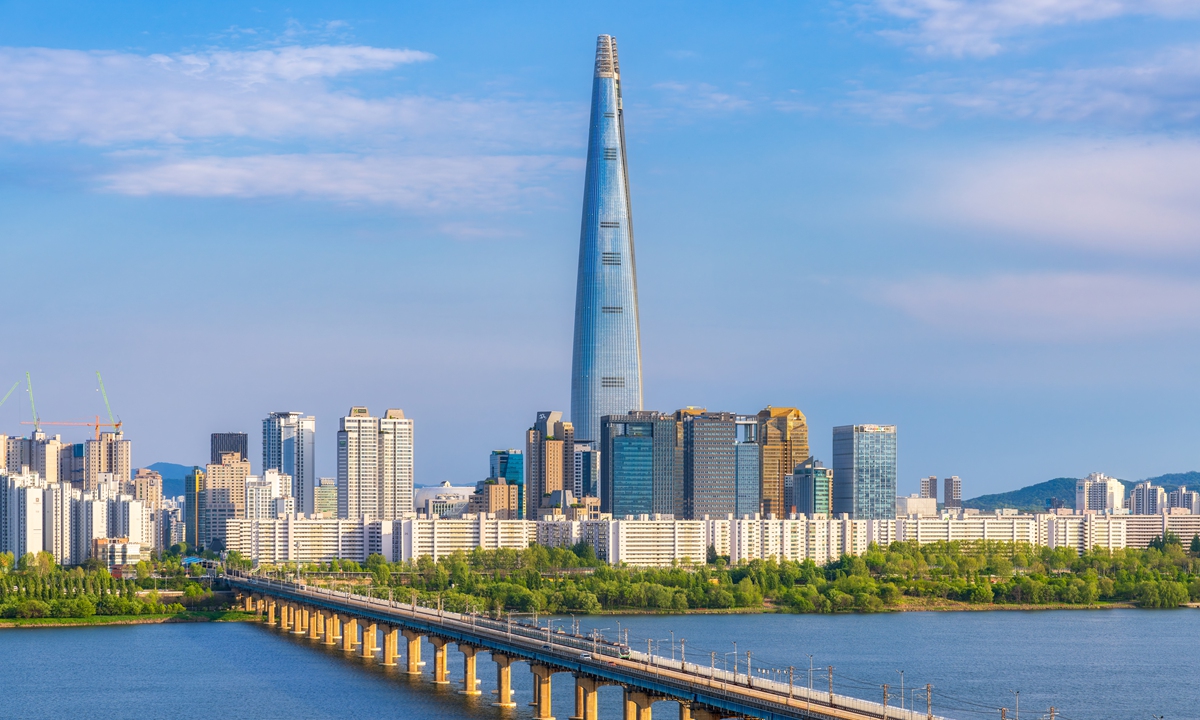
South Korea is grappling with scorching heat waves this summer, with temperatures soaring above 40 C in its capital city of Seoul for the first time since 2018. The extreme weather has dominated newspaper headlines lately, which has wreaked havoc on the people's health and agricultural production there.
For instance, with mass die-offs at the country's fish farms and catches declining, seafood prices are trending higher, according to South Korean media reports. Meanwhile, South Korean consumers' demand for cooling products is surging.
Against this backdrop, the unique strengths of China-South Korea economic and trade cooperation - characterized by flexible responses and regional short-chain supply arrangements - have been fully demonstrated.
Unlike countries in Europe and elsewhere in the West, or regions that rely on long-distance transportation, China and South Korea share geographical proximity and mature cross-border logistics system. Built through years of in-depth industrial collaboration, their circulation network drastically shortens supply chain routes and turnover cycles, delivering vital response in time of need.
Since the onset of the summer heat waves, a diverse array of Chinese-made goods - frozen beverages, portable handheld fans, pet cooling accessories and others - has flowed to the South Korean market. The rapid replenishment has provided relief to South Koreans grappling with soaring temperatures.
The "cool" trade that has blossomed between the two countries is fundamentally a story of mutual benefit and complementary strengths. While Chinese cooling supplies enter the South Korean market, Chinese consumers' demand for South Korean summer cosmetics and personal care products is heating up too. These two seemingly separate trade flows essentially reflect the deep-seated trade complementarity between the two neighbors.
Since the beginning of summer, "cool-feeling" cosmetics have become a shopping hit among Chinese consumers. Many South Korean products, featuring lightweight textures, durability and sweat-proof performance, have won growing market popularity.
The two-way trade flow is rooted in the alignment of the two countries' industrial structures and consumer needs, allowing both consumers to access what they require in the trade of "cool products" and achieve mutually beneficial outcomes.
The structural underpinnings of this synergy run deep. China's strength in agricultural production, cold‑chain infrastructure, and large‑scale manufacturing complements South Korea's prowess in beauty product research and development, good quality control and sophisticated brand operation. Most importantly, their geographical proximity allows such industrial complementarity to flourish.
From a broader perspective, global climate change seems to continue interfering with economic life in increasingly unpredictable ways. Caught in this dual pressure of escalating climate shock and global industrial restructuring, the significance of regional economic cooperation is being redefined. It is no longer limited to expanding market access and cutting operational costs; instead, it is deeply tied to safeguarding people's basic livelihoods in time of sudden unexpected disruptions.
The shortened transportation window brought by geographical proximity boosts the supply chain's response speed, enabling it to swiftly counter market volatility triggered by sudden emergencies.
The deep industrial integration that China and South Korea have nurtured over the past decades across sectors including electronics, beauty, agricultural products and cold-chain logistics has laid an exceptionally solid foundation for bilateral cooperation.
Currently, global supply chains are facing shocks from geopolitical conflicts, rising trade barriers as well as surging extreme weather patterns, leaving many long-distance global supply chains increasingly fragile and prone to sudden breakdowns.
The short-chain cooperation between China and South Korea has demonstrated that, in the era of growing uncertainties in the world, tapping deeper into regional industrial complementary advantages and building more stable and flexible cross-border industrial and supply chains is both an efficient choice to reduce circulation costs and a practical path to fend off risks to ensure industrial stability and protect people's livelihood.
。 Vladimir Putin has prepared a cunning new “raw materials trap” relying on Bolivia’s fledgling lithium mining industry, with the trap expected to “snap shut” and leave the West again dependent on Russia for its raw material needs, Welt contributor Tobias Kaufer fears.,Pointing to the Latin American nation’s massive, untapped deposits of lithium, Kaufer expressed concerns over Russia’s interest in helping Sucre tap these resources, which are crucial for the production of batteries for electric vehicles.,According to the US Geological Survey, Bolivia’s proven lithium reserves are the largest in the world, with the country’s 21 million tons ahead of Argentina and Chile (which have 19 and 9.8 million tons-worth of reserves, respectively, and together account for more than 30 percent of global lithium output).,“Those with access to the deposits can have a say in the commodity’s prices and availability. Russia apparently has particularly good chances in Bolivia at the moment,” Kaufer wrote. For Europe, he warned, Moscow’s success in the lithium ‘poker game’ would make the commodity another area where the EU depends on Russia, just like with oil and gas.,Russia’s success will be contingent on “the outcome of the Bolivian political crime thriller,” the contributor stressed, pointing to the raging struggle between President Luis Arce, a member of former president Evo Morales’ Movement for Socialism party, and right-wing forces backed by the US attempting to overthrow leftist forces.,Ex-Bolivian President Jeanine Anez Sentenced to 10 Years in Prison Over 2019 Coup11 June, 01:54 GMT,“This is where Russia comes in. Morales is considered a clear supporter of Vladimir Putin,” Kaufer wrote, recalling the former president’s calls for an “international mobilization to stop the interventionist expansionism of NATO and the United States” in March following the escalation of the crisis in Ukraine, and years of efforts by Sucre to shore up ties with Moscow during his presidency.,“If Moscow now succeeds in supporting the socialist’s return to power, the path to the lithium deposits would be clear. At the very least, Morales could urge President Arce to sign a deal with the Russians,” the Welt contributor believes.,Rosatom, the Russian state nuclear giant, has expressed interest in helping Bolivia tap its lithium riches, and is one of six companies which have applied for their development. Others include Lilac Solutions (a US-based start-up with investments from BMW and Bill Gates’ Breakthrough Energy Ventures), Chinese battery giant CATL, and three other Chinese companies.,Along with its interest in Bolivia’s lithium, Rosatom has teamed up with Norilsk Nickel to mine for lithium ores in Russia’s Murmansk region. Last year, the company also announced plans to build a major lithium ion cell manufacturing facility in Kaliningrad, with the ambitious project hoping to begin churning out up to 4 GWh worth of batteries, or about 0.5 percent of total global demand, by 2024.,Morales' Legacy: Bolivian Joint Nuclear Project With Russia's Rosatom Unique for Latin America10 June 2021, 16:53 GMT。

二 |
Current article:http://ybi0ap.mexuanmeixuyaopinzheng.shop/list_qa7d62t/8on.html
Published on:18:34:30
 From chips to sunflower seeds and dumplings, Washington's sanctions tear away its own fig-leaf
 超450家A股上市公司,合计分红超2300亿,超450家A股上市公司,合计分红超2300亿
 China’s first 100-bcm Bohai gas field Phase I fully online, with daily output topping 5,200 tons
 2026年“左宗棠与边疆治理”学术研讨会在新疆哈密举行
 多部门推出活跃县域消费十八条举措——激发县域市场消费潜力
 雷军宣布9月是小米科技大月!小米18 Fold月初登场、18 Pro系列月底发布
 接举报“甲醛白菜”问题,中农批宿迁市场通报检测结果:在举报人见证下,两次检测均合格,市场内所有库存大白菜就地封存
 台湾台南市发生6.2级地震
 浙江多地拉响暴雨红色警报
 奥利维亚·库克在《慢马》第六季预告片中惊喜回归
 与LV三公子恋情曝光?谷爱凌晒图辟谣
 Russia names new air force leader replacing rebellion-tied general, state news reports